
Monday, March 03, 2008
Health Warning!!


Sunday, March 02, 2008
I may be retired, but I'm cutting edge . . .
The unique approach by Nintendo in incorporating an interactive remote that describes its own position in space to the console and enables the player to interact with the TV screen by playing games and "sports" in a way that wasn't previously possible. The Wii Sports software provided free with the kit incorporates Ten Pin Bowling and the control provided by the remote gives a very passable impression of the real thing - bringing back memories of my youth in the bowling alleys of Sheffield. The more you practice the better you get, direction control and spin application are skills that can be developed - along with a modicum of physical exercise (just like the real thing my legs were tortured for a day or two at first). There is also a fitness section which presents you with small snippets of several physical activities and measures your input. My first efforts fully reflected my age group but I've recently improved to a 40 year old! - I'm liking Wii even more :-)
Now I've succumbed and bought my first "proper" game - Super Mario Galaxy - one of the latest from Nintendo and hailed as one of the best, time will tell if my enthusiasm is still undiminished in a month or so.

It seems the sales of Nintendo Wii units have outsold the combined efforts of Sony (Playstation) and Microsoft (X-Box) over the last few months so that must say something!
Monday, February 18, 2008
Test Post from Mac Widget on desktop
Sunday, January 27, 2008
Talking of Big Macs

. . i've got one!!, not the lovely squidgy-munchy thing I'm only allowed after I've just had major surgery (see below) . . but the lovely cool aluminium and glass one piece iMac super computer that Apple designed along with the iPod and iPhone.

Tuesday, July 10, 2007
A Tale Of Two Bypasses
The Northern General provided me with new culinary experiences, probably top of the list is for the first time in my life I experienced the real fear of starvation. This was propagated by several consecutive days of eating next to nothing!
I realise that the anaesthetic process suppresses the appetite for a day or so but I know mine had returned when the morning cornflakes took on a gastronomic aura.
Meals were organised in advanced by filling in a tick-box list for the next day's lunch and evening meals.
Anything hot arrived incognito - being securely hidden from the eager feeder's view until the very last minute by a plastic lid, a cunning device allowing the provider to be away and out of (polite volume) earshot across the ward. Cold items usually sandwiches or salads were either packed in label-obscuring plastic boxes or, in the case of a salad, hidden beneath a mound of lettuce leaves.
I sampled the "Egg" salad. Beneath the near-impenetrable leaves was the following:
1 tomato cut in half, 4 slices of cucumber and 5 slices of a very small hard-boiled egg (only 3 of which had any signs of a yolk). That was it! I just longed for a spot of simple salad cream or a little grated carrot to stir a glimmer of interest.
My ward-mates shared these experiences with the same horror. Barry's 2 piece lemon sponge trapped inside a lidded pot that clung to it's miserable life by piece{A} being so hard as to provide gavel duty when someone auctioned off an edible rarity and piece {B} steadfastly refusing to leave the nest in spite of prising with the (grubby) cutlery. A pot of soup eagerly awaited by Ray (who hadn't eaten for 2 days) was fridge-cold. Try a beef sandwich, one slice of bread /one thin slice of reformed beef /one slice of bread. Vegetable curry and rice, bear in mind here that the ward was hot enough to reduce a Flora pack to liquid in 5 minutes, consisted of a glutinous mound of diced veg starting to crust over which was so hot (chemically) as to take what little breath was available coupled with a heap of rice dry enough to totally dehydrate the fittest patient in half an hour.
By the 5th night of my 6 I was having not only food nightmares in my very limited sleep sessions, but could think of nothing else during waking hours. I watched all the cookery programs on the TV with the firm belief I would never live long enough to enjoy a decent meal again.
Toast was to be my saviour. It was served before bedtime every night with butter/jam along with a cuppa. On the sixth night the waiting was unbearable. I had hideous thoughts that for some reason it wouldn't arrive - a bread strike, a work to rule in the kitchens, don't serve toast on a Monday because it offends some remote Afghan hill tribe, whatever.
Imagine my relief when that familiar trundling sound was heard and the now universal clapping and cheering got nearer and nearer. I had 6 slices that night.
During the food delerium periods I had a repeated fantasy of devouring a Big Mac and fries in the car park of the Worksop Branch on my way home. I believed then and still now that this kept what little sanity I had left.
It's about 8 hours since we made that little diversion down the Worksop Bypass to McDonalds and consumed what I now consider the finest meal of my life, (can't remember the last time I had one)
Moral, take salad cream, sandwich pickle and cutlery and enjoy your bypasses!
p.s. 30/04/2009
I'm fine now and mentally able to point you in this direction for further delights in the hospital food category: here
Monday, February 05, 2007
Global Warming Arrives!!


These photographs were taken on February 2nd 2007 in Carlton Wood, right behind our house. They show a group of three Rose-ringed parakeets settled in the trees. To my knowledge this is the first sighting of these birds in the area (unless you know different). They stayed all day and were seen in the area until sundown.
These parakeets are fairly sedentary so I hope they stay around and perhaps breed here!
The Rose-ringed Parakeet (Psittacula krameri), also known as the Ring-necked Parakeet, is a gregarious tropical parakeet species that is popular as a pet. Its scientific name commemorates the Austrian naturalist Wilhelm Heinrich Kramer.
Ring-necked parakeets are long-lived, and nest in holes in trees. There is no record of their presence impacting on native birds, but the RSPB is monitoring areas where these birds have settled
In the wild, Rose-ringed Parakeets usually feed on buds, fruits, vegetables, nuts, berries and seeds. Wild flocks also fly several miles to forage in farmlands and orchards causing extensive damage
Ring-necked Parakeets first bred in England 1969.
The smooth, non-glossy white eggs are about 30 mm by 23 mm. The female incubates the eggs by herself. After the young hatch, they are fed by both parents.
The European populations became established during the mid to late 20th Century from introduced and escaped birds. There are two main population centres in Britain: the largest is based around south London, Surrey and Berkshire, and by 2005 consisted of many thousands of birds. A smaller population occurs around Margate and Ramsgate, Kent. Elsewhere in Britain, smaller feral populations have established from time to time (e.g., at Studland, Dorset).
They are slowly spreading from their southern stronghold and are now seen as far north as Sheffield and Leeds; a pair nested and possibly bred in Sheffield in 2003
The Rose-ringed Parakeet is considered one of the best talking parakeets and can learn a vocabulary of up to 250 words. The speech clarity can be pretty amazing and they have a habit of practising until perfect and then shocking their owners with an accurately uttered word. Now these birds come in many mutations, including the common green, blue, grey among many other colours.
Wednesday, December 27, 2006
My DVD Collection
but judging by other online collections I've a long way to
go before it can be described as large. See it HERE .
Sunday, December 24, 2006
Fractal Doodling

Monday, December 11, 2006
I've got a new PC!!

I've had a wireless gateway for nearly a year now and only just got the thing to work wirelessly. Having two desktop pc's (one upstairs and t'other down) which are on a wired network, I thought an early Crizzy prezzy would be in order to replace an ageing laptop running Windows ME , with a shiny new wireless-enabled job. Not being one to take snap decisions I'd sorted it in half an hour online. PC World had a Compaq Presario 6133 with £100 off. That was last friday 8/12 and it's taken me a while to get the wireless bit working and the other pc's plugged into the new router, but here I am WIRELESS at last in the conservatory typing this note. The new notebook has the AMD Turion 64 X2 dual core chip and is ready for Windows Vista in the new year. In fact I should get a free upgrade! if the enclosed leaflet is true
(update 28/3/07 - received the upgrade today, having read of trouble with drivers etc. I'm holding off installing it)
Saturday, November 18, 2006
40 Years Ago!
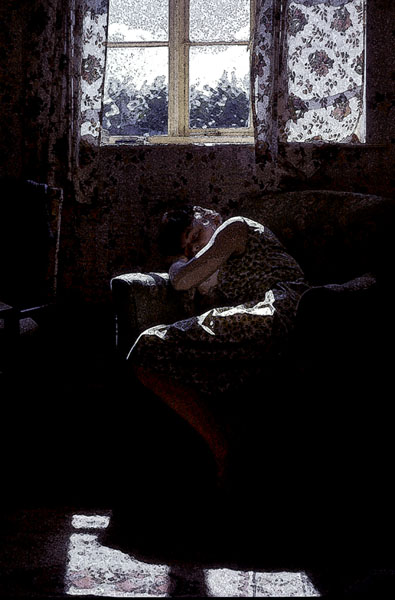
It was 40 years ago, we were on holiday in Norfolk in a rented cottage - a really old thatched affair that had all the proper trimming. Whitewashed walls and a lovely apple orchard. It was walking distance from Barton Broad and Neatishead village, Admiral Horatio Nelson spent time here in his youth. His sister rented Barton Broad, and Horatio visited her when on leave from the navy. (Tradition has it that he once lost a chain and locket in these waters.)
Anyway, my (then) girlfriend Lorraine and my cousin David and his wife Deirdre and her mum and dad and I spent a week in this quiet corner of Norfolk. A spot of fishing on Barton - rising at silly hours of the morning and rowing out on the Broad with the mist still swirling and everyone tucked in their bunks on the moored boats. I don't recall anyone catching anything memorable but the peace and tranquility was enough!
The picture is Lorraine fast asleep in the cottage after the early risings took their toll! Surprisingly, she's still with me after 40 years!
Saturday, September 23, 2006
I've got (another) new camera!
Now that compact digital cameras with a decent pixel count are
available at reasonable prices – I’ve got another.
My first, a Panasonic) was only 0.75 MP (magapixels) about 7 years ago and it was expensive by today’s prices.
Next came a 2 MP Kyocera that was ok for printing up to 6x4 or so and was an unusual camcorder style
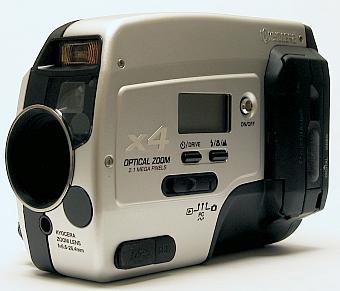
Then a Nikon Coolpix 3700 with 3.2 MP – a tiny thing that was very pocketable.

All the while my “serious” photography involved Canon SLR film cameras and later a digital EOS 300D with 6.3 MP. The quality of digital photography from the larger sensor size of an SLR was not achievable with the much smaller sensor of the compact.
The latest acquisition is a Fujifilm Finepix E900. This has a 9 MP sensor and, whilst not the size of an SLR sensor, it will easily print an A3 with very satisfactory quality,
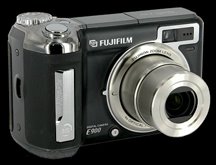
This one now allows full manual exposure control along with all the features expected in an SLR. It also shoots RAW mode files which allows a lot of post editing and refinement.
Sunday, June 11, 2006

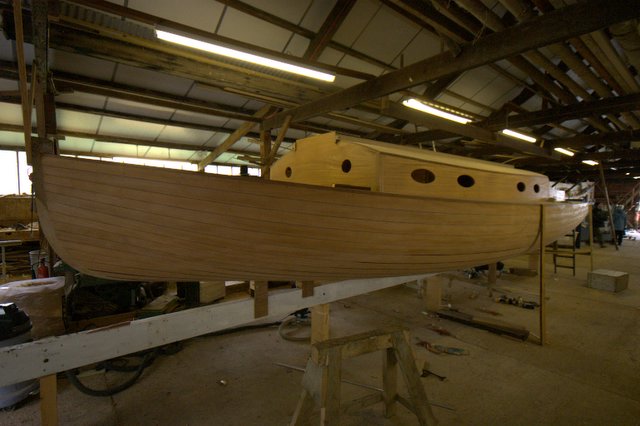
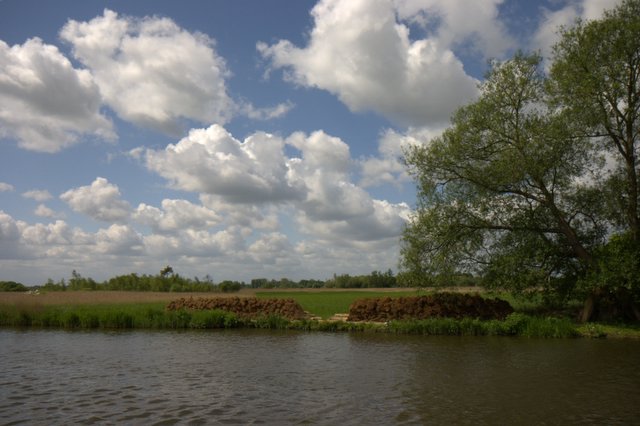
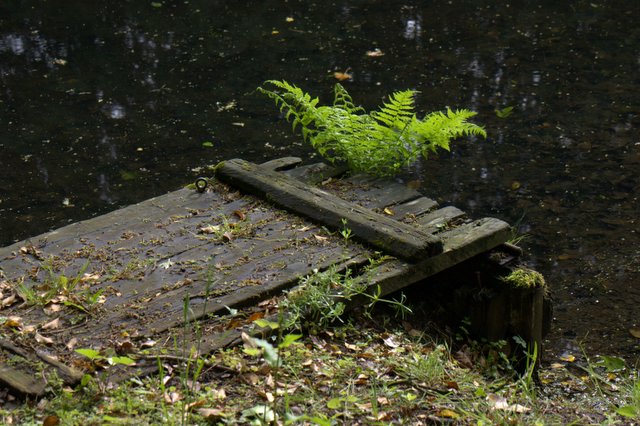
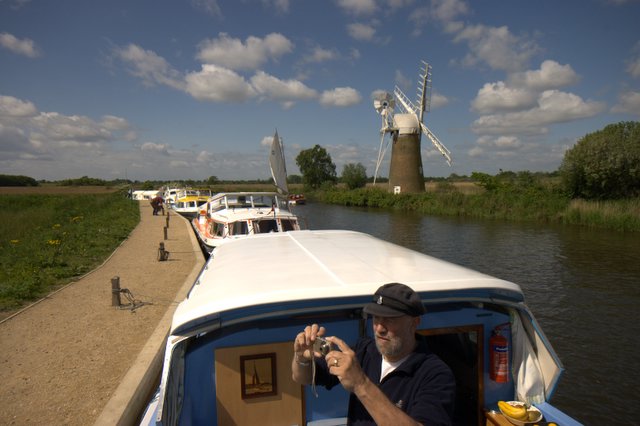

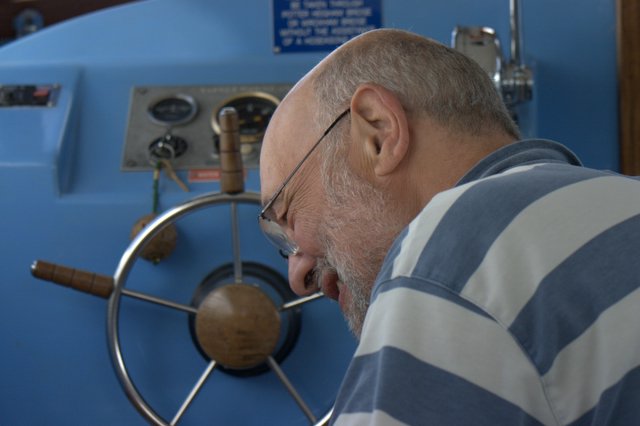
A Week on the Norfolk Broads
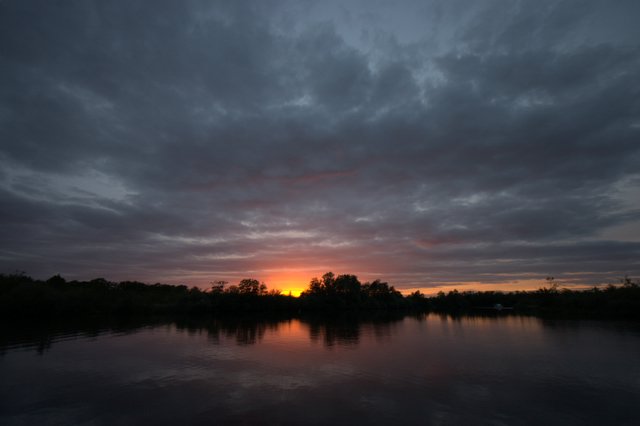 The one and only sunset from a week on the Broads during the last week of May. Very cold and windy with occasional torrential rain.
This was at Womack Water where we moored overnight.


 Posts
Posts


